

If you’re researching private schools in Sacramento, I can probably describe your evenings: twelve browser tabs open, a notes app full of half-finished comparisons, and a growing suspicion that every school website was written by the same person. (“Nurturing environment.” “Whole child.” Got it.)
So here’s the guide I wish someone had given me. But I should tell you first, my kid attends Courtyard School, and I help Courtyard with its marketing, so I’m not exactly a neutral bystander here. I’m a parent who did this exact search, made my choice, and now works with the school I chose. But I’ve tried to write about every school below the way I’d talk about it with a friend, including mine. Read my Courtyard section with that in mind, and then go and verify everything on your own tours. You were going to tour them all anyway, right? Because no blog post (including this one, obviously) beats standing in a hallway watching how the adults talk to the kids.
What’s important when you’re comparing
Rankings and test scores can be comforting because they feel like real data, but most of that is noise. The things that actually predict whether your kid will thrive are less Googleable and a lot more human, and you can spot almost all of them on a single tour:
- Grade levels served. TK–8, PK–8, PK–12; each shape implies different things about culture and transitions.
- Enrollment and class size. A school of 135 is an entirely different animal than a school of 580, and neither is automatically better. (Here’s what small class sizes actually change day to day, if you want the deep dive.)
- The schedule, including the bookends. If you work until 5:30, a school that ends at 3:00 with an hour of aftercare is not a school you can actually use, no matter how lovely the tour was.
- Educational philosophy. Traditional, accelerated, multiage, project-based. These are real differences that shape your child’s day.
- Religious affiliation, if any. All four schools below are independent and nonsectarian.
- Neighborhood. A 25-minute drive looks perfectly reasonable on a map and feels like a personality test at 7:40am on a rainy day.
- Tuition range. Sacramento private schools cost roughly $15,000 to $40,000 a year, depending on school and grade. Every school below offers tuition assistance. Ask early, and get the specifics.
At a glance
Figures are from publicly available 2025-26 information, so treat them as a starting point and then verify with each school directly.
| Sacramento Country Day | Merryhill Midtown | Brookfield | Courtyard | |
|---|---|---|---|---|
| Grades | PK–12 | PK–8 | PK–8 | TK–8 |
| Approx. Enrollment | ~580 | ~200-400 | ~200 | ~135 |
| Neighborhood | Sierra Oaks | Newton Booth (Midtown) | Midtown | |
| Religious Affiliation | None | None | None | None |
| Extended Care | Yes (varies) | Yes | Yes (7:30am–6pm) | Yes (7am–6pm) |
| Tuition Range | ~$26K–$37K | ~high teens | ~$19K | $17,800 (K-8) |
| Distinct Angle | K–12 college prep | National network | Accelerated curriculum | Multiage, working-parent day |
The four schools
Sacramento Country Day School
Country Day is the largest school here and the only one running through 12th grade, with roughly 580 students on an 11-acre Sierra Oaks campus, and the resources that scale brings: college counseling, varsity athletics, AP courses in the upper school. The lower school gets its own building and a low student-teacher ratio, so the little kids aren’t sharing a hallway with seniors.
Best fit for: Families who want one school for the whole K-12 haul and like the idea of a college-prep trajectory that starts early. The trade-off of any K-12 school is exactly that: your child’s elementary years unfold inside an institution that is also, at the same moment, managing teenagers.
Ask on a tour: What’s the class size in the specific grade your child would enter, not the school-wide average? How do the lower and upper schools share the campus day-to-day? What does the typical tuition-assistance award look like?
Tuition runs from roughly $26,000 in the early grades to about $37,000 in high school. Need-based assistance is available.
Merryhill Elementary & Middle School (Midtown)
Merryhill’s V Street campus in Newton Booth serves PK–8 as part of a national school network (Spring Education Group). That brings system-wide curriculum and infrastructure, and trades away some of the locally grown character you find at independents. Classes are reported to be around 18 students.
Best fit for: Families who want a structured, standardized program, the reassurance of a national network behind it, and hours that work for working parents.
Ask on a tour: How much of the curriculum is decided locally versus handed down from the national office? How long do teachers tend to stay? Where do 8th graders go for high school?
Tuition isn’t published openly. Public reporting suggests high teens annually for elementary grades, but confirm those numbers directly when you inquire.
Brookfield School
Brookfield is a K–8 independent in the Pocket with an accelerated identity it wears proudly. The school describes its program as built for “bright and gifted children,” complete with pre-first and accelerated kindergarten tracks. About 200 students, French and Spanish starting in kindergarten, and extended care that runs from 7:30am to 6pm.
Best fit for: A kid who thrives on pace and high expectations.
Ask on a tour: What does “accelerated” mean for a child strong in math but average in reading? How much homework at each grade? When a student is struggling to keep up, what happens next, and what does social-emotional support look like alongside all of the academics?
Tuition runs around $19,000 annually per public reporting.
Courtyard School
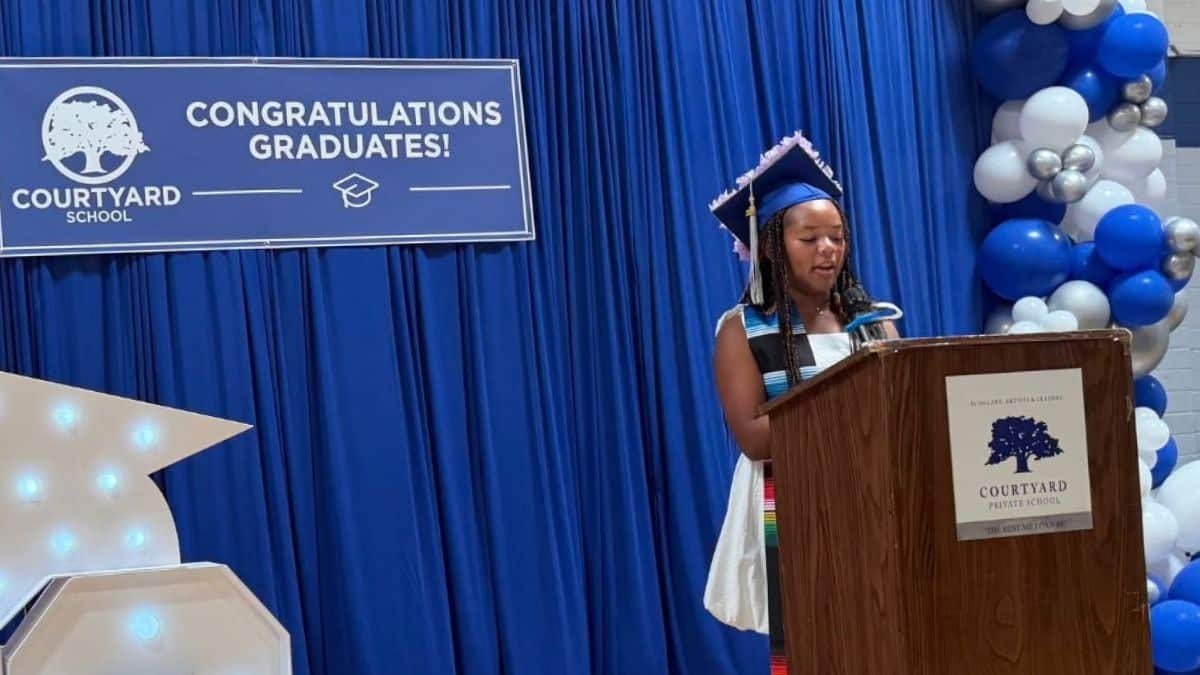
Courtyard is a TK–8 nonprofit independent school at 24th and C in Midtown, around 135 students, and it’s been a part of the community since 1982. Most families come from Midtown, East Sacramento, Land Park, Curtis Park, and Tahoe Park. The day is built for busy and working parents, with before- and after-care until 6pm, and breakfast, hot lunch, field trips, and break camps included in tuition rather than billed as add-ons.
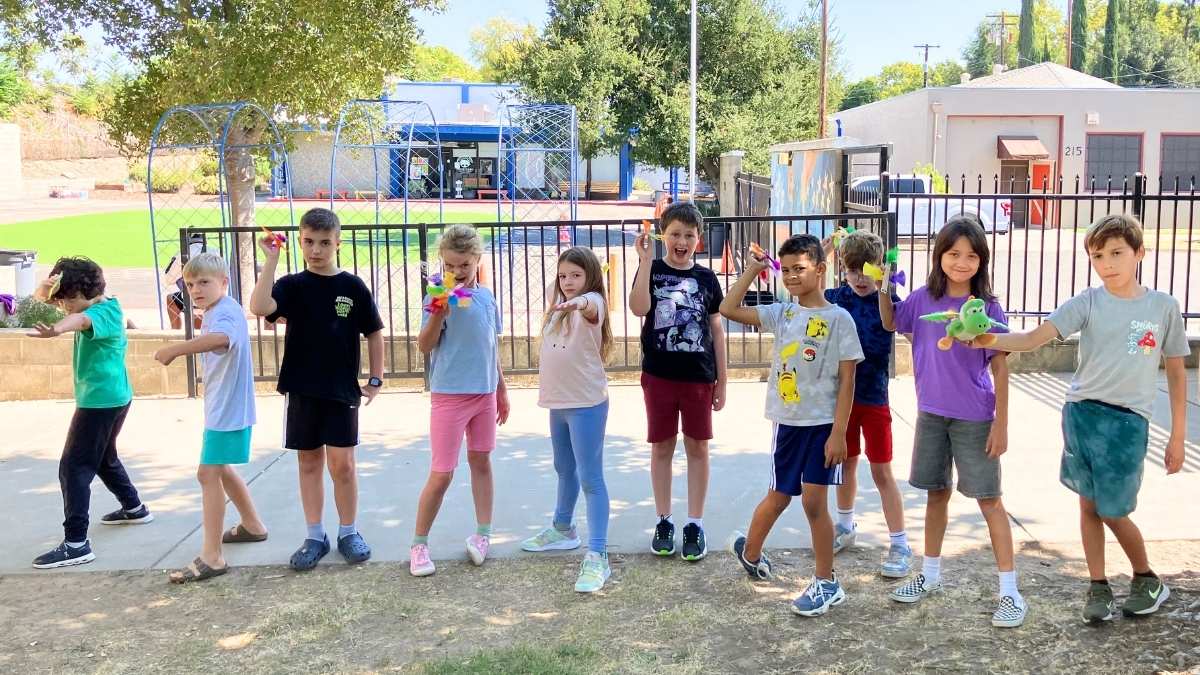
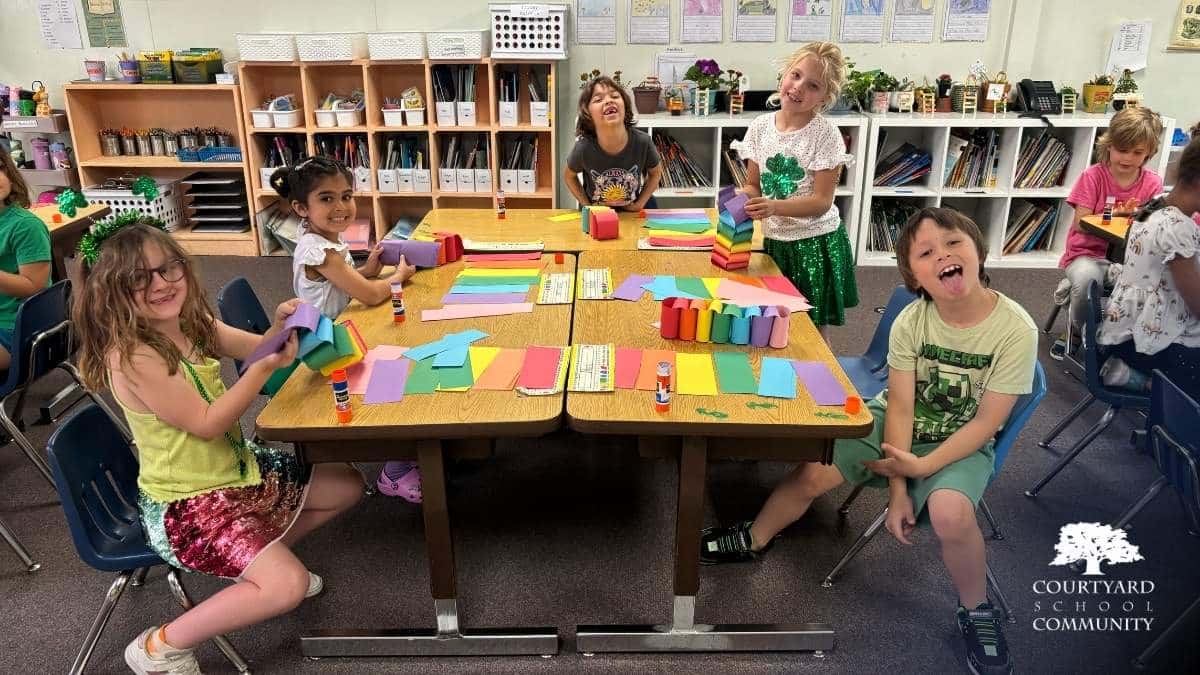
There are two things make it structurally different from the other schools on this list. First, there are multi-age classrooms. After second grade, kids stay with the same teacher for two years, so by year two the teacher truly knows your child and teaches to exactly where they are. Each kid works right at the edge of what they can do, one notch past comfortable. Second, the size. At 135 students, every adult in the building knows every kid by name. The office, after-care staff, all of them.
One thing to note: it’s a school where demand shows up in the calendar. TK typically fills by the spring before the school year starts. For 2026-27, TK, kindergarten, and 3rd/4th are full; 1st, 2nd, 5th/6th, and 7th/8th have openings.
Best fit for: Families who want their kid to be really known, not just enrolled; two-income parents who need the full-day schedule so they can work; kids who’d get lost or go quiet in a bigger building. (If that last one is the worry that brought you here, we also wrote about the signs a child might thrive in a smaller school.)
Ask on a tour: How does multi-age work, from hour to hour and day to day? At 5:30, is after-care real programming or a holding pen? Where do 8th graders go when it’s time for high school?
Tuition is $17,800 per year for K-8, and need-based assistance is available.
Which one is right for your family?
After a few tours, you’ll have a head full of impressions. The energy of the front office, whether kids in the hallway looked happy, how the principal answered a hard question you asked. Most of that is real, so trust your instincts.
Then sit with three harder questions:
- Who is each school built for? Every school has an ideal student it’s designed around. The accelerated school assumes a kid who loves to move quickly, the K-12 prep school assumes a future AP student. The small multi-age school assumes a kid who needs to be known. So which one is yours?
- What’s the real schedule math? Count the hours between drop-off and the last possible pickup, and think about what happens in the extended-care hours. There’s a real difference between “open until 6” and “worth being there until 6.”
- Walk into the office at pickup. The scheduled tour is a performance, and that’s fine, everyone performs for company. But the end of a school day is closer to the truth.
Five questions to ask on every tour
- What’s the actual class size in the grade my child is entering next year?
- How long do your teachers stay, on average?
- How do you handle a child who’s struggling, academically or socially? (Listen for specifics, not reassurance.)
- What does extended care look like at 5:30 p.m.?
- Where do your graduates go to high school, and how do you help them with that transition?
Go deeper
We’ve also written specific guides for a lot of the other decisions you make along the way:
- TK vs. Kindergarten: which is right for your child?
- Choosing a private kindergarten in Sacramento
- Choosing a private middle school in Sacramento
- What is a multi-age classroom?
- What small class sizes actually mean, IRL
- Signs your child might thrive in a smaller school
- A Day at Courtyard
- Our summer camp guide (an easy, low-pressure way to experience a campus)
If Courtyard made your shortlist
Tour more than one school. I mean it. The right fit tends to reveal itself by contrast, the way you don’t realize the music was playing a little too loud until it stops. And if you’d like to see a small, full-day TK–8 up close, schedule a visit or call (916) 442-5395. One-on-one tours, year-round, no hard sell, just a walk through a school where everyone will know your kid’s name by the second visit.