
TK is one of those things you hear about as your kid reaches preschool age, but while we all nod along and pretend to be on top of it, some of us are not so sure. When are the deadlines, and how do I find the right school? And what’s the difference, TK vs. Kindergarten? So you nod, and you file it under “look that up later.” And then later never comes, because, toddlers… There is always a snack to make, or a sleep regression, or a shoe that has vanished into another dimension.
If that sounds familiar, you’re not alone. Transitional kindergarten is one of the more confusing parts of the early school landscape in California, partly because the rules have changed a lot in the last few years. So here’s what I wish someone had told me: what TK is, how it’s different from kindergarten, and how to figure out what is right for my kid.
So what is TK, really?
Transitional kindergarten is the first year of a two-year kindergarten program. Think of it as a bridge between preschool and kindergarten, built for kids who are right on the edge: old enough to be ready for a school setting, but young enough that jumping straight into kindergarten might be asking a lot of them.
The day leans play-based and developmentally appropriate, which is a fancy way to say that the learning is real, but it does not feel like work. Kids learn letters, numbers, and fine-motor skills, but through hands-on activities, toys, and games rather than worksheets and pressure. Honestly, the best way to picture it is as the year a child learns how to do school. Routines, sharing, raising a hand, sitting in a circle without rolling away or melting into the floor (most of the time).
The age rules everyone Googles
This is the part most parents actually come looking for, so I’ll get right to it. For the 2026-27 school year, California’s age cutoffs work like this:
- Transitional kindergarten: your child turns 4 by September 1
- Kindergarten: your child turns 5 by September 1
- First grade: your child turns 6 by September 1
TK is now “universal,” which just means that all four-year-olds are age-eligible. One thing to keep in mind is that both TK and kindergarten are optional in California, since school isn’t legally required until age 6. Courtyard follows these same state guidelines, so the dates above are the ones that apply here, too.
What’s actually different, day to day
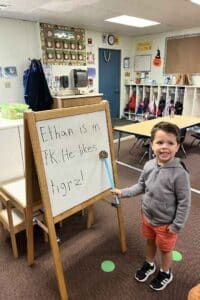 Let’s set age aside for a second, because TK and kindergarten do feel different once you are in the classroom.
TK is a gentler and more foundational year. A big part of that is social and emotional: learning to be part of a group, name and manage big feelings, follow a rhythm, and build the kind of independence that makes everything down the road easier. The academics are real but disguised as play. Counting during a game, sounding out their own name, and building the hand strength that writing will depend on.
Kindergarten picks up from there. There’s more structured academic time, the first real building blocks of reading, and an expectation that kids can focus for longer stretches and work a little more on their own.
The biggest gift TK offers is time. For a kid with a summer birthday, one who’s smart but young, or one who just needs a bit longer to grow into a school setting, that extra year can change everything. Not because they’re behind, but because readiness is about where they are developmentally, not how many candles were on the last cake. And since TK is the first year of a two-year arc, kids get a whole extra year to find their footing and build confidence before first grade begins.
So which one is right for your child?
There is no one-size-fits-all answer here, and anyone who tells you otherwise has not met enough five-year-olds. It really does come down to your kid. But here are a few things to consider:
- If your child is technically old enough for kindergarten but still seems young, whether it’s emotionally, socially, or in their ability to stick with a task, TK can be a real gift. And so can starting kindergarten the following year as one of the older kids in the room.
- If your child seems ready, meaning focused, independent, comfortable saying goodbye at drop off, and comfortable in the mix with other kids, kindergarten may be the better fit.
Mostly, just trust what you see at home. You’re watching for focus, independence, how they handle a goodbye, and how they hold up in a group. You are not watching for whether they can already read, so cross that off your worry list. And here is the reassuring part: thoughtful, loving parents land on different answers for different kids, sometimes even within the same family. There is no wrong choice here, just the right one for your particular child.
Quick common questions parents ask
Is TK the same as preschool? No. TK is part of the school system and uses a modified kindergarten curriculum. Preschool is childcare-based and not a part of K-12.
Is TK required? No. In California, school isn’t mandatory until age 6, so TK and kindergarten are both optional.
Can my child skip TK and go straight to kindergarten? Yes, if they meet the kindergarten age cutoff, which means turning 5 by September 1. TK is an option, not a requirement.
How it works at Courtyard
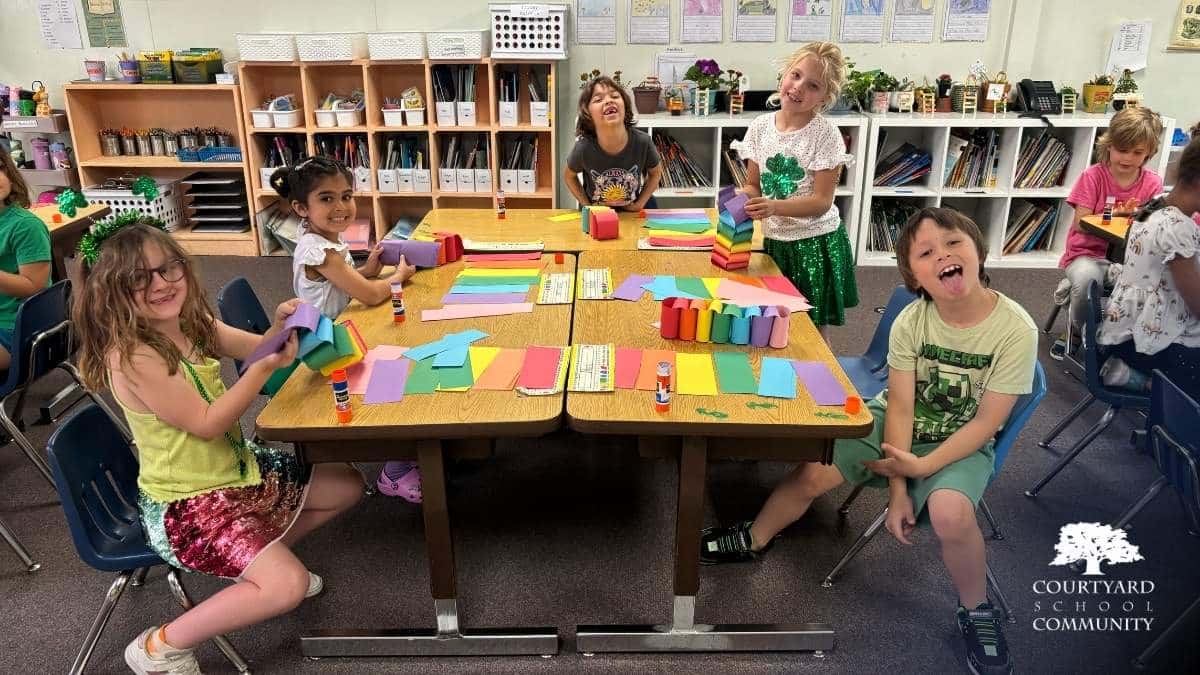
At Courtyard, the youngest students move from TK to Kinder after a year. Each classroom is a warm, dedicated space made for teaching and learning at exactly that age. A familiar room with familiar faces.
My kid just finished TK, and for us, it was a great choice. His birthday is one day before the age cutoff, so he’s always going to be the youngest. And while he is incredibly smart and funny and sweet (obviously), spending a full day in a school setting was a big transition for him. TK gave him the space to work on his social-emotional skills and start building more independence (big shout-out to Courtyard for going WAY above and beyond to make him feel welcome and comfortable).
If you’d like to see for yourself, schedule a visit or call us at (916) 442-5395. We’d love to show you around and help you talk it through.